
· 5 min read
Power, Flexibility, and Control: Choosing the Right IT Model
When it comes to technical infrastructure, there's no one-size-fits-all solution. With a wide technological landscape, businesses today are faced with deciding between multiple management topologies – each offering its o...
By Microsec IT
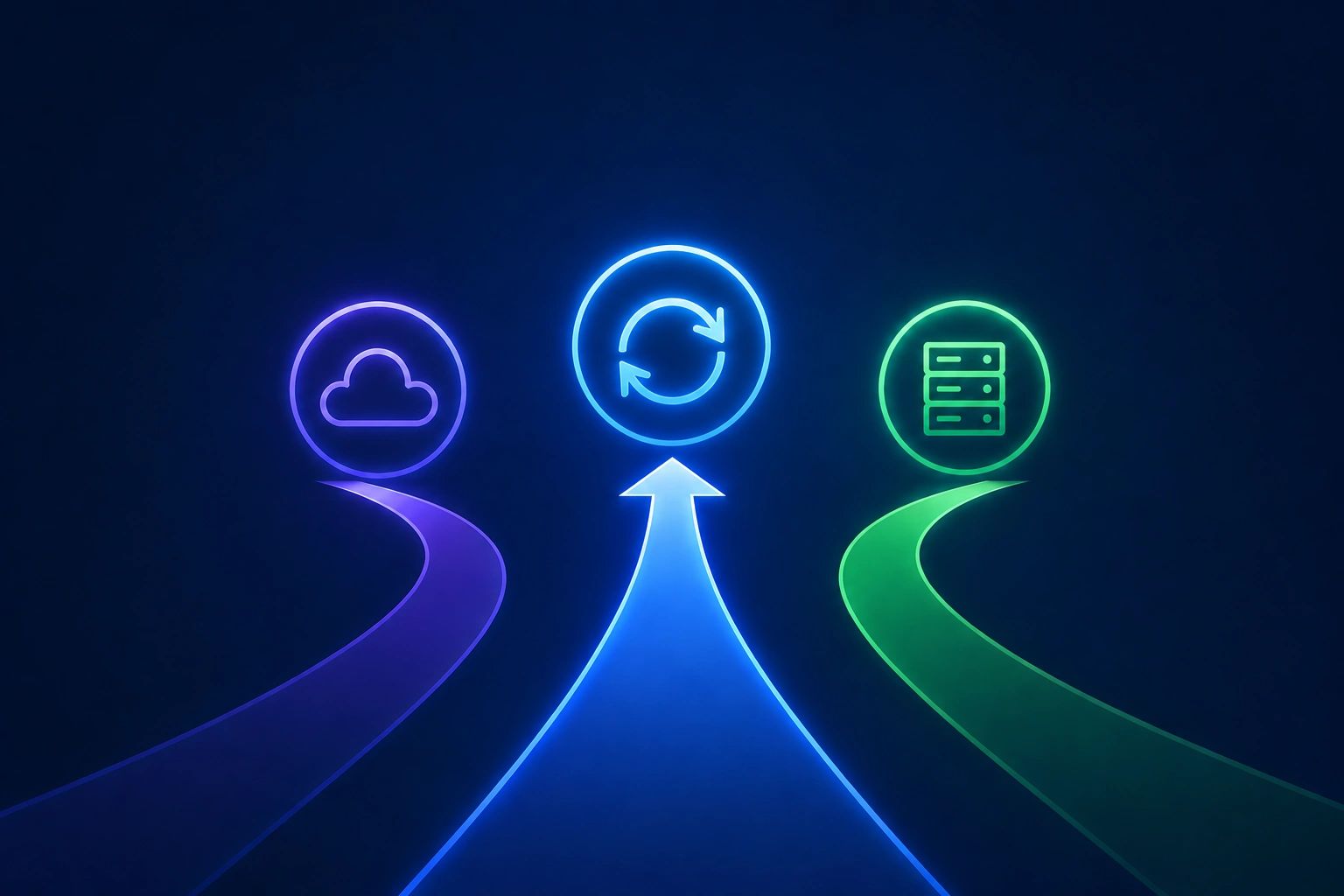
When it comes to technical infrastructure, there's no one-size-fits-all solution. With a wide technological landscape, businesses today are faced with deciding between multiple management topologies – each offering its own advantages, trade-offs, and long-term implications. Making the right decision can improve scalability, reduce costs, strengthen security, and boost efficiency. Making the wrong decision could cost thousands, widen your attack surface, and even impact your customers.
Choosing a technological topology is not just technical, but strategic. It could be an asset to your business, just as much as it could be a liability. So, how do you know which is right for you?
What are My Options?
Technological Infrastructure is typically managed in three key methods. On-Premises, where your business hosts its own tools and data. Public Cloud, where your data is hosted by a third-party provider. Or a Hybrid approach that takes advantage of the benefits of both.
On-Premises
On-Premises infrastructure is hosted in your own physical environment, such as an office space or data center. In this instance, your organization owns and/or manages all hardware, software, networking, and security tools leveraged by your team.
- On-premises management provides full control over infrastructure and data.
- This can be capital-intensive, and your team is responsible for uptime.
- Often requires internal IT management, extensive documentation, and long-term commitment.
- Scalability is often limited without new investment into equipment and resources, such as servers and network devices.
Public Cloud
Public Cloud environments like Azure, AWS, or Google Cloud, host your infrastructure in an environment that they manage in their own environment. In this instance, you receive vendor support, and providers often establish uptime guarantees.
- Most vendors offer pay-as-you-go and subscription-based services, for consistent billing.
- Public Cloud provides near-instant scalability and elasticity to prevent downtime and provide a direct path for growth.
- Managed infrastructure and services mean that vendors will guarantee uptimes, such as Microsoft's 99.9% guarantee.
- The Public Cloud is accessible from anywhere and supports BYOD scenarios and mobile devices.
Hybrid
Hybrid environments combine characteristics of both on-premises and public cloud resources, allowing workloads to move between environments as needed. In this instance, you maintain a certain level of on-premises control while taking advantage of public cloud infrastructure. This provides a multi-layered approach that enhances the benefits of Public Cloud scalability with On-Premises granularity and management.
Key Considerations
Cost Structure
- On-Premises: High upfront investment, lower recurring costs
- Public Cloud: Low upfront investment, variable monthly expenses
- Hybrid: Mixed model, requiring careful cost tracking
Scalability and Growth
- On-Premises solutions are generally more stable and don’t rely on third-party vendors
- Public Cloud offers immediate scalability, while on-prem and hybrid require investment and configuration
- Hybrid solutions give you both the scalability and consistency of both, but often require the most investment
Security and Compliance
- On-Premises gives you the most granular, direct control over your environment
- Public Cloud providers offer enterprise grade security, but share responsibility
- Hybrid allows sensitive data to remain on-site, while still leveraging cloud benefits.
Performance and Accessibility
- On-Premises offers reliable local performance, but large investment to be used remotely
- Public Cloud is accessible from anywhere, but adds variables such as connectivity
- Hybrid combines local workloads with remote access flexibility for the most consistent experience
IT Resources and Expertise
- On-Premises often requires in-house management
- Public Cloud reduces infrastructure management, but still requires oversight
- Hybrid demands the most expertise due to its complexity
How do I Choose?
Choosing between On-Premises, Public Cloud, and Hybrid environments isn’t just a technical decision, it’s a business strategy decision. The right environment will align with your growth, support your operation needs, and balance costs, performance, and risks.
Choosing On-Premises:
- You require strict control over data and systems
- You have predictable workloads
- You already have significant infrastructure investments
Choose Public Cloud:
- You need flexibility and rapid scalability
- Your workforce is remote or distributed
- You want to reduce infrastructure management overhead
Choose Hybrid:
- You’re transitioning to the cloud gradually
- You have legacy systems that can’t move easily
- You need to meet specific compliance or performance requirements
What we Provide at Microsec IT
At Microsec, we understand how impactful investing in IT can be, and what it means to your company's growth. Our team has experience in each of these unique environments, and we take a holistic, tailored approach to designing a one-of-a-kind solution that fits your needs. Whether it's migrating to a cloud-based solution, supporting legacy services and applications in an on-premises environment, or building scalability in a hybrid environment, we're here to support you.
Whether you have general questions or are ready to explore the best solution for your business, our team is here to help. Contact us at info@microsecit.com to schedule a no-obligation consultation and discover how we can support your goals.